
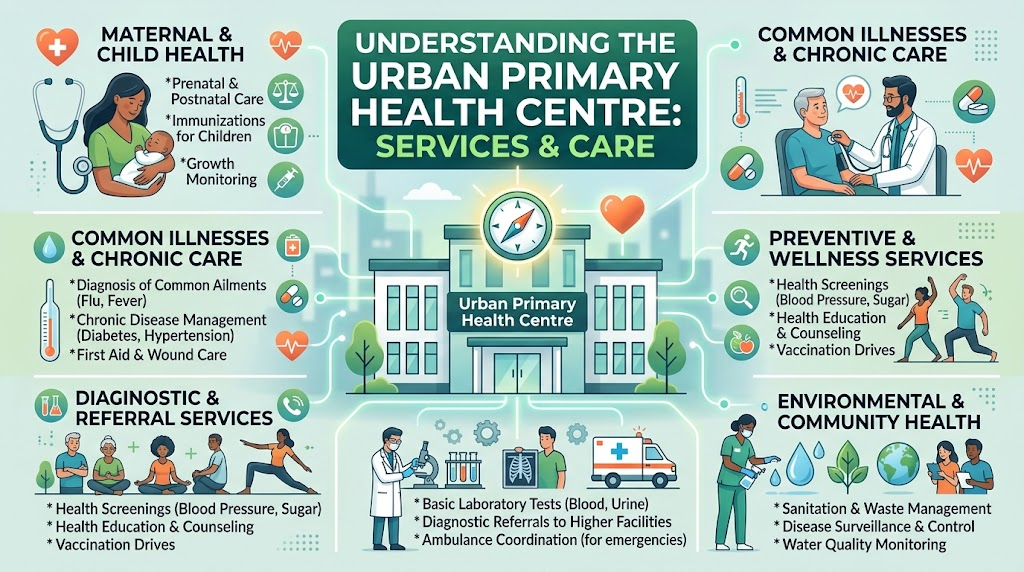
Welcome to our friendly guide on community wellness! When you live in a busy city, finding quick medical help can sometimes feel overwhelming. Big hospitals are often far away and packed with people. That is why an Urban Primary Health Centre plays such an important role in our daily lives. These small neighborhood clinics bring essential medical services right into local communities. They make sure that every family can get basic checkups, vaccines, and emergency advice without traveling for hours. Think of these centers as your first and friendliest stop for staying healthy. Whether you need a quick blood pressure check or advice on a minor cough, your local clinic is designed to help you right away. Let us explore how these wonderful spaces keep our cities strong, happy, and well cared for every single day.
What Is an Urban Primary Health Centre?
An urban primary health centre is a local medical facility built inside a city or town. Unlike giant hospitals that handle major surgeries, these neighborhood clinics focus on everyday health needs. They act as the very first point of contact between you and the healthcare system. When you feel sick, you do not need to wait in a long hospital queue. Instead, you walk into a clean, welcoming local clinic. These centers are staffed by caring doctors, nurses, and helpers who know the local neighborhood well. Their main goal is to catch health issues early before they turn into big problems. By keeping care close to home, they make wellness simple and stress-free for everyone in the city.
Why Local Clinics Matter in Big Cities
Living in a fast-paced city is exciting, but it also comes with high stress and pollution. An urban primary health centre provides a calm and reliable safety net for city residents. Many families live in crowded areas where germs can spread quickly. Having a nearby clinic means you can get instant guidance during health outbreaks or seasonal flu spikes. These centers also bridge the gap for people who might not afford expensive private hospitals. They offer affordable or free care, ensuring that financial worries never stop someone from seeing a doctor. Ultimately, these local hubs build stronger, safer communities where health is always a top priority.
Core Medical Services You Can Expect
When you visit an urban primary health centre, you will find a wide range of helpful services. These clinics do much more than just hand out cold medicine. They offer routine checkups, basic lab tests, and crucial vaccinations for children and adults. If you cut your finger or need a minor wound cleaned up, the skilled nurses can take care of it right on the spot. They also manage long-term conditions like high blood pressure and diabetes by providing regular monitoring. By offering these diverse treatments under one roof, the clinic saves families time, money, and lots of unnecessary worry.
Keeping Mothers and Babies Healthy
Maternal and child care is a huge focus for any urban primary health centre. Expecting mothers can visit the clinic regularly to make sure their baby is growing safely and healthily. Nurses provide helpful advice on nutrition, prenatal vitamins, and safe delivery preparation. Once the baby arrives, the clinic becomes a trusted partner for tracking growth milestones and giving vital infant vaccines. Parents can ask questions about feeding, sleeping, and common childhood illnesses. This continuous support gives every newborn the absolute best start in life while giving parents peace of mind.
Stopping Diseases Before They Spread
Prevention is always better than cure, and an urban primary health centre excels at keeping communities disease-free. These clinics run regular awareness campaigns about handwashing, clean drinking water, and safe food habits. During changing seasons, they organize special drives to prevent vector-borne illnesses like dengue or malaria, which are common in cities. By tracking local health trends, the staff can spot unusual sickness patterns early and warn the neighborhood. Simple actions like distributing oral rehydration packets or educating teens on hygiene stop small issues from turning into major citywide outbreaks.
Friendly Faces: Doctors and Nurses Who Care
One of the best things about an urban primary health centre is the warm, personal touch of the staff. Unlike massive corporate hospitals where you feel like just a number, local clinic workers often know your name and family history. This creates a deep sense of trust and comfort. When children visit for a shot, a gentle nurse with a sticker can turn a scary moment into a brave adventure. Doctors take the time to listen patiently to your worries rather than rushing you out the door. This human connection is what makes community healthcare truly special and deeply effective.
Easy Access for Everyone in Town
Accessibility is a key design rule for every successful urban primary health centre. These facilities are deliberately placed close to residential neighborhoods, bus stops, and main roads. Because they are nearby, elderly residents or parents with toddlers do not have to struggle with long, exhausting commutes across town. Operating hours are also tailored to fit regular community routines, making it easy to drop by before or after work. By removing travel barriers, these clinics ensure that healthcare is truly open and welcoming to every single person in the city.
Saving Time and Reducing Hospital Crowds
City hospitals are meant for severe accidents, major surgeries, and life-threatening emergencies. When people go there for minor fevers, it creates massive congestion and long wait times. An urban primary health centre solves this problem by handling everyday illnesses right in the neighborhood. When minor cases go to local clinics, big hospitals stay clear and ready for critical trauma patients. At the same time, patients save hours of waiting time and avoid expensive hospital bills. It is a smart system that brings balance and efficiency to urban healthcare.
Technology and Tracking in Modern Clinics
Even though they are small, today’s urban primary health centre locations use smart tools to stay organized. Many clinics now keep digital patient records so doctors can easily check past treatments, allergies, and vaccine history. This prevents mistakes and speeds up consultations. Digital tracking also helps health departments monitor disease trends across the city in real time. By blending friendly, personal care with modern record-keeping, these clinics offer a smooth, reliable experience that keeps pace with our rapidly growing digital world.
How You Can Support Your Local Clinic
Your local urban primary health centre thrives when the community actively participates and cares for it. You can support your clinic by attending health workshops, keeping your family’s vaccination records up to date, and spreading the word to neighbors who might need help. Keeping the clinic surroundings clean and respecting the hardworking staff also goes a long way. When neighbors work hand-in-hand with medical workers, the entire community becomes healthier, happier, and much more resilient against everyday health challenges.
Complete Detailing Table
| Feature Category | Description & Details |
| Primary Purpose | Deliver accessible, affordable, and basic medical care directly to city residents. |
| Target Audience | Urban families, children, expecting mothers, and local neighborhood residents. |
| Core Services | Routine checkups, vaccinations, maternal care, minor injury treatment, and disease prevention. |
| Staff Members | Local general physicians, trained nurses, community health workers, and support staff. |
| Key Benefits | Reduced hospital overcrowding, low cost, short travel distance, and personalized attention. |
| Operating Model | Government-backed or community-supported public health framework designed for cities. |
Frequently Asked Questions
1. What is an urban primary health centre?
It is a small, local medical clinic located inside a city that provides everyday healthcare services, checkups, and vaccines to nearby residents.
2. Do I need an appointment to visit?
Most local clinics welcome walk-in patients for basic checkups and minor illnesses, though timing can vary depending on daily patient volume.
3. Are the services free or affordable?
Yes! These centers are usually funded by public health programs to offer very low-cost or completely free medical assistance to the community.
4. Can pregnant women get checkups here?
Absolutely. Maternal care, prenatal guidance, and regular health monitoring for expecting mothers are major parts of what these clinics do.
5. What should I bring when I visit?
It is helpful to bring a valid ID, any previous prescription slips you have, and your vaccination card if you are bringing a child for shots.
6. How does visiting a local clinic save time?
Because these centers are right in your neighborhood and focus on basic care, you avoid the long travel times and massive queues found in giant city hospitals.
Conclusion
Taking care of your health does not have to be complicated or stressful. An urban primary health centre brings dependable medical help right to your neighborhood so you can feel secure every single day. By offering everything from routine checkups to child vaccines, these friendly local hubs protect our families and keep our cities thriving. Why not take a moment today to locate the nearest clinic in your area and share this helpful guide with a friend or family member who might need it? Stay healthy, stay informed, and keep smiling!
